
I have been preoccupied by Big Cars recently – in part because they use more fuel or electricity and have higher carbon emissions than ‘ordinary’ cars. But also because (as a cyclist) they are threatening and leave no wiggle room. Cambridge is approaching a tipping point where busy periods see close to half the cars on the road 2m wide or more, and an SUV driving down a 7.3m-wide residential street – with big cars parked on both side – leaves cyclists pedalling between an SUV and a hard place. This sits uneasily with Cambridge having one of the highest proportions of cycle trips of any UK city, and with the City Council’s promotion of active travel.
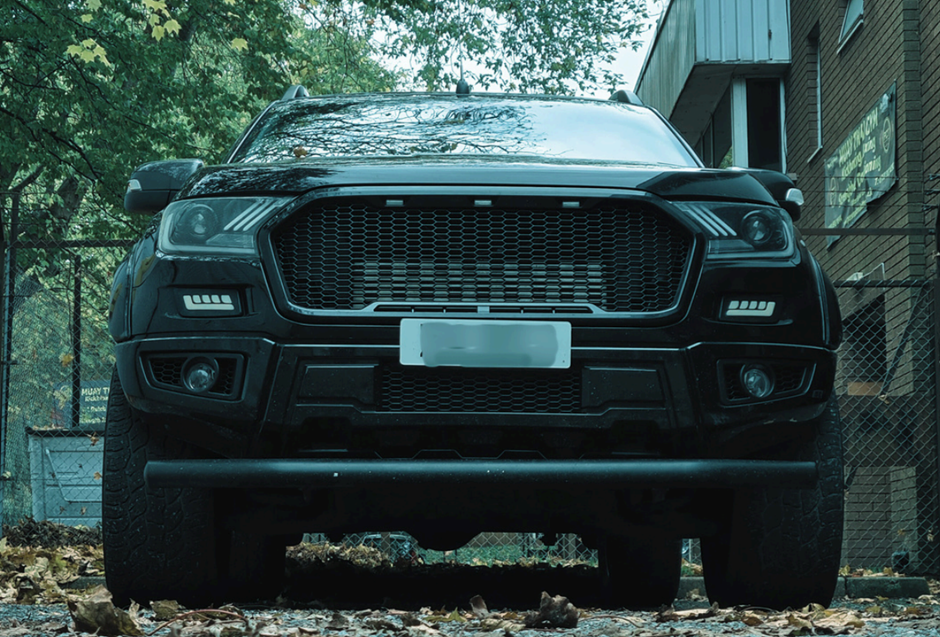
Photo: SUV Alliance
The UK appears to be following the American model for motoring, tending to SUVs and larger cars. Sales of large cars and SUVs are higher now than at any point in the past, and nationally, one third of cars are SUVs. Most affluent households now own large cars – far larger than typical cars on UK roads 20 years ago. The likelihood is, as today’s new cars become tomorrow’s second hand cars, even middle- and low-income people will own large vehicles.
This is a problem for six reasons:
- Large cars use more fuel (or electricity, which must be generated), and have higher emissions per mile than small vehicles
- Large cars require more materials and resources to manufacture, and present a bigger disposal problem at the ends of their lives
- Large cars need more space (on roads, for parking, and street geometry)
- Large cars are more threatening for people undertaking active travel (cycling, walking)
- Large cars may affect the behaviour of drivers – the high driving position and mass of the vehicle may isolate them from other road users, and make them less considerate*
- Large cars degrade roads and transport infrastructure faster
Changes in the new car market have witnessed leasing agreements become the dominant ways to purchase new cars. PCP (Personal Contract Purchase) is most common, followed by Hire Purchase, and then PCH (Personal Contract Hire, commonly called ‘leasing’). The chief difference is what happens to the vehicle at the end of the contract, but for all three there is a smaller difference in up-front costs (and monthly costs) than when people buy new cars outright in cash. This means that even people with modest incomes who prioritise their vehicle ahead of other outgoings can afford big cars. (Naturally, there is a tendency for those who spend most time driving to spend a larger fraction of their income on their vehicle, and possibly also to favour large cars where they have more space. This is mutually-reinforcing: big cars are likely to be driven further.)
Higher fuel costs and (for internal combustion vehicles) fuel duties are manifestly not sufficient to deter people from purchasing ever larger vehicles.
At the same time, a looming hole in tax raised through fuel duties as EVs replace vehicles with combustion engines means that the Treasury needs to reform road and fuel duties if current revenues are to be maintained.
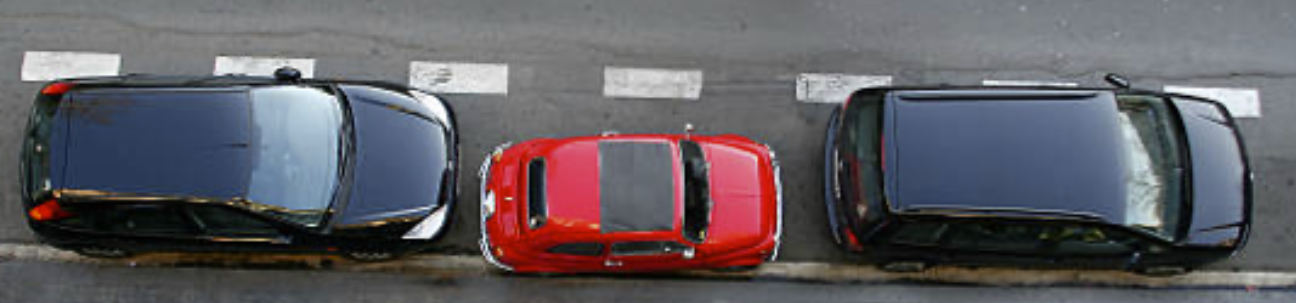
Why should big cars pay the same as small ones for parking, when they occupy more space?
Defining Big Cars
There not a clear-cut threshold between cars in different size bands, but ‘normal cars’ are commonly considered to be 3.5 to 4.8m long, 1.6 to 1.8m wide, and usually below 1.5m high. ‘Large cars’ are normally taken to be longer than 4.8m, wider than 1.8m, and again, usually below 1.5m high. ‘Small SUVs’ are normally 4.2 to 4.6m long, 1.7 to 1.8m wide, and typically 1.6 to 1.7m high, with higher ground clearances. ‘Large SUVs’ are taken to be 4.8m and above in length, 1.9m wide or more, and generally at least 1.7m tall, again with larger ground clearances.
Typical Weights of Cars
| Normal Cars | Large Cars | Small SUVs | Large SUVs |
| 1,000-1,800kg | 1,800-2,500kg | 1,300-2,000kg | 2,000-3,500+kg |
Are Big Cars Safer?
Big cars and SUVs are perceived as being safer to drive than smaller cars. However, the Euro NCAP safety tests – the most comprehensive safety assessment for new cars – show that size is not the primary indicator of car safety. There are small, medium and large cars that have been awarded the top NCAP rating of five stars, and when ranked by the more detailed NCAP scores out of 400, the small SUV Zeekr X (an all-electric car, similar to a Kia Niro, and a little bigger than a Golf) was rated the second-safest car on sale last year.[1] It came just behind the top-rated Mercedes’ E-Class large saloon. The Zeekr 001 (a medium-estate car, similar to the Porsche Panamera Sport Turismo or the Polestar 4) scored a little lower, but still ranked equal sixth in the safest cars on sale last year.
Overall across the eleven safest cars tested by NCAP last year, there was one small SUV, one mid-sized saloon, three large saloons, three large SUVs and three large estates. (Eleven are listed rather than ten because three cars shared equal ninth position.)
Eleven Safest Cars Last Year
| Medium Saloon | Large Saloon | Medium Estate | Large Estate | Small SUV | Large SUV |
| NIO ET5* | Mercedes E-Class VW ID7 Mercedes EQE | Zeekr 001 | Skoda Superb VW Passat | Zeekr X | Smart #3 Audi Q6 e-tron Mazda CX-80 |
* On sale in UK in 2025
We need to remember that NCAP ratings are not just rating driver and passenger safety, and they also include assessments of safety for other road users, including autonomous controls that have nothing to do with size or body shape. The Zeeker X scored well, for example, partly because of a good autonomous braking system which successfully avoided accidents with cyclists in tests, and it has front doors fitted with controls to prevent car occupants opening doors in front of cyclists.
The Market is Shifting to Large Vehicles
In 2024, SUV sales were higher than ever, accounting for 62 per cent of new car sales in the UK. This was a big jump from just 47 per cent at the start of the decade.[2] On average, UK cars are growing at a rate of 1 cm every two years, and UK cars are already wider than European cars.[3]
Lower leasing costs, coupled with a larger market of second hand large vehicles, mean that large cars are increasingly viewed as an option for second vehicles. The growth of the second-hand market will also mean that even poorer households – who may lack disposable income for maintenance costs – can access oversized vehicles. One possible scenario in 20 years’ time is that 90% of the vehicles on UK roads are large and heavy – with today’s city cars relegated to being a niche product. Many car manufacturers are even now reducing or abandoning their city car ranges; arguably the opposite of what should happen in the climate emergency.
More Fuel Use and Emissions from Large Vehicles
The International Energy Agency says that oil consumption by petrol and diesel SUVs increased by 600,000 barrels per day globally between 2022 and 2023 – more than a quarter of the total annual rise in global oil demand for that period.[4] The IEA also states that the global fleet of SUVs alone has higher CO2 emissions than Japan, and that petrol or diesel SUVs burn 20% more fuel than medium-sized cars, largely because they weigh more.
Even for electric vehicles, Which?’s figures for energy-efficiency[5] indicate that large electric SUVs use 28% more electricity per mile than electric city cars, or 14% more than medium-sized SUVs (see table). Which? also notes that heavier vehicles also mean higher particulate emissions from tyres and brakes – an important factor for urban air quality – and increased road wear.
Miles per kWh of Electric Vehicles
| Large SUV | Medium EV | City Car |
| 2.8 miles per kWh | 3.2 miles per kWh | 3.6 miles per kWh |
Source: Which? Car Guide 2025
Are big cars worse for pedestrians?
Dutch research from a decade ago found that doubling vehicle weight leads to a tenfold increase in the probability of fatal accidents. For accidents between two vehicles, they found a 500 kg increase in the weight of the other car increases the probability of a fatality by about 70%. For serious injuries, this effect was about 30%.[6]
More recent US research indicated that children are eight times more likely to die when struck by a SUV compared to children struck by a passenger car. This research also found that accidents involving SUVs were much more likely to lead to fatalities than road accidents involving other vehicles, and the researchers also note that the rise in US pedestrian and cyclist fatalities since 2009 coincides with the rising proportion of large vehicles. [7]
Separate US analysis of road accident data found that cyclist injuries from crashes with SUVs were “notably more severe” than those from crashes with other cars, particularly due to more severe head injuries.[8] Much of this is due to higher bonnets. However, it is also true that some car designers have acted on this and tried to make the bonnets of new SUVs less damaging in accidents.
In the UK, my analysis of Department for Transport accident data[9] from 2023 revealed major differences between the likelihood of pedestrian fatalities between SUVs and other cars, and between large and small cars (see table). I categorised all cars involved in accidents on UK roads according to whether they were ‘normal’, large, small SUV or large SUV, and I looked at the number of fatal, serious and slight injuries of pedestrians. The picture was complicated, with accidents affected by both different numbers of cars on the road, and different mileages driven. Overall, small SUVs have a lower proportion of serious pedestrian injuries when there are accidents, compared to non-SUVs, while large SUVs have a higher proportion than small SUVs.
The UK data indicates that size and weight of large cars seems to have a material effect on fatalities: large cars have a higher proportion of fatalities than either ‘normal’ cars or SUVs. Surprisingly perhaps, small SUVs have the lowest proportion of pedestrian fatalities.
Analysing UK Data on Car Size and Injuries
| Pedestrian fatality | Serious pedestrian injury | Slight pedestrian injury | Total | Proportion of Serious Injury | Proportion of Fatality | |
| Normal cars | 139 | 2,101 | 4,337 | 6,577 | 31.9% | 2.1% |
| Large cars | 41 | 524 | 1,129 | 1,694 | 30.9% | 2.4% |
| Small SUVs | 33 | 562 | 1,300 | 1,895 | 29.7% | 1.7% |
| Large SUVs | 14 | 206 | 440 | 660 | 31.2% | 2.1% |
Source: Derived from Department for Transport data 2023
Steve Tunnicliff from Alliance Strategy Consulting has also looked hard at UK accident data, and compared this against the number of cars of each model on UK roads. He found an average (mean) of 330 pedestrian casualties per million cars in circulation. Normalised like this, the most dangerous cars for pedestrians emerge as Lexus’s large SUV the RX400 (1,594 pedestrian casualties/million cars), the Toyota Prius (1,569 casualties/million cars), and Audi’s RS3 (1,081 casualties/million cars).
Steve’s hypothesis here – which I support – is that there are specific and subtly distinct reasons for each of these models having high casualty rates. The Lexus RX400 is a very quiet hybrid that pedestrians do not hear coming, and the size, bonnet height and weight may also be factors. The Toyota Prius hybrids are also quiet vehicles, and on top of this they are commonly used as taxis, so they do very high mileages. Steve also believes that Audi RS3s are likely to appeal to people (predominantly men) who drive fast and are pre-disposed to take risks.
The safest cars on the road, based on pedestrian injuries and fatalities, were Volkswagon’s Caddy (41 pedestrian casualties/million cars), the Citroen Berlingo (67), and Vauxhall’s Combo (89). All three of these are vans – sometimes with windows, and sometimes with seven seats. They are functional and unexciting – arguably the polar opposite of Audi RS3s. They may also have long gears and economical engines that mean they accelerate slowly. All three also have gently sloping bonnets and windscreens shaped like reclining chairs, which may also make for fewer casualties.
What Can we Do About it?
The SUV Alliance[10] has a plan for re-balancing the playing field to make SUVs less attractive for motorists. They have five ‘Asks’ and a Manifesto for reducing the number of SUVs in towns and cities. They want to:
- Reform Vehicle Excise Duty to introduce a progressively higher tax on the most polluting vehicles, proportional to the vehicle’s weight
- Set maximum width, length and height limits for new car sales from 2030 so that car makers cannot continue to sell passenger vehicles that are too big for parking spaces
- Introduce a national tobacco-style ban on SUV advertising – including hybrid, plug-in hybrid and electric SUVs – in outdoor advertising spaces like billboards and bus stops
- Mandate that carmakers must publish an “ecoscore” for all new electric vehicles, combining engine efficiency with the carbon footprint at the vehicle’s production stage including the battery, steel and aluminium
- Empower and encourage more local authorities to introduce progressive parking tariffs on heavier, bigger and more polluting passenger vehicles.
I support them on every count, and I would extend their proposed ‘ecoscore’ to cover all vehicles, not just EVs. I think the Department for Transport should also consider a new progressive tax on leasing cars, so that you pay more to lease larger vehicles, and an increasing scale for Road Tax, so those responsible for increased road wear carry more of the burden for repair costs. Arguably, the dangers posed by higher bonnets should also be reflected in Ask #2 on maximum car sizes, so from 2030 onwards there are fewer serious injuries and deaths caused by children’s heads hitting bonnets.
[1] https://www.whatcar.com/news/the-safest-cars-on-sale-today/n19724
[2] https://www.gbnews.com/lifestyle/cars/suvs-too-big-car-tax-costs-parking-restrictions
[3] https://www.transportenvironment.org/discover/cars-are-getting-1-cm-wider-every-two-years-research/
[4] https://www.bbc.co.uk/news/articles/c778ekg64mjo
[5] Which? (2025) Car Guide 2025. London: Which? p42
[6] https://www.sciencedirect.com/science/article/abs/pii/S2212012213000142
[7] https://www.sciencedirect.com/science/article/abs/pii/S0022437522000810
[8] https://www.tandfonline.com/doi/full/10.1080/15389588.2023.2219795
[9] https://www.gov.uk/government/collections/road-accidents-and-safety-statistics
[10] https://www.suv-alliance.org.uk/